Definition
A HubbuyCN spreadsheet is a browsable catalogue of finds
The name is a leftover. Years ago shoppers really did swap product links in shared documents, and the word stuck. What you open today is a website: pages of product cards, sorted into categories, each card carrying a photo, a name, the marketplace it sits on, and one link. The catalogue this guide links into is one of those.
What it is not is a shop. Opening a card does not put anything in a basket, because the catalogue holds no stock, takes no payment and ships nothing. It shows you which listing is worth buying. HubbuyCN is what turns that listing into a parcel at your door.
What a product card tells you
Card layouts differ between catalogues, but a card worth acting on carries roughly this much. Anything less and you are guessing.
| On the card | What it tells you | What to watch for |
|---|---|---|
| Product photo | What arrived for somebody else | Seller studio shots repeat everywhere. Buyer photos are the useful ones |
| Item name | What the thing is, in English | Vague names usually mean nobody checked |
| Marketplace and link | Where to buy it, and on which platform | A dead link is the fastest sign of a stale catalogue |
| Price shown | What it cost when the entry was added | A snapshot, not a quote. Sellers change prices |
| Seller or store | Which shop on the marketplace | Same product, different shop, different result |
| Category it sits under | How to find its neighbours | Good sorting is most of what a catalogue is for |
Why bother
Why a spreadsheet beats searching from scratch
Not money. Time, and a specific kind of risk.
Searching a Chinese marketplace without the language is slow and the results are noisy. An entry in the catalogue means one particular listing, from one particular seller, that arrived and was good enough for somebody to write down. You are borrowing the outcome of a purchase that already happened.
That is also the limit of what a catalogue can do. It cannot tell you whether the seller still has stock, whether the batch changed, or whether the item will clear customs where you live.

Four questions that separate a live catalogue from an abandoned one
Is anything dated?
Entries go stale quietly. A link that died six months ago looks identical to one added yesterday unless somebody is stamping dates.
Are there real photos?
Quality check photos are the only evidence layer a catalogue has. If they are missing or broken, every entry is just a claim.
Does it name sellers?
The same product from a different shop can arrive differently. An entry that names only the item is half an entry.
Is it actually sorted?
Two thousand links in one heap is not a catalogue, it is a dump. Working categories and filters are most of the value.
Where this guide sends you, and why
Two destinations, on purpose.
For finding things we point into a maintained finds catalogue, because it keeps finds grouped by category with real product photos instead of leaving you to scroll one enormous heap. For everything involving money, goods or shipping we point at hubbuycn.com, because that is where your account, your parcel and your refund rights actually live.
We deliberately do not run product listings here. A third copy of the same catalogue, going stale on its own schedule, would help nobody.
If a link you found turns out to be dead, the search inside HubbuyCN is the fallback. It covers the same marketplaces and lets you filter by the service guarantees the seller offers.
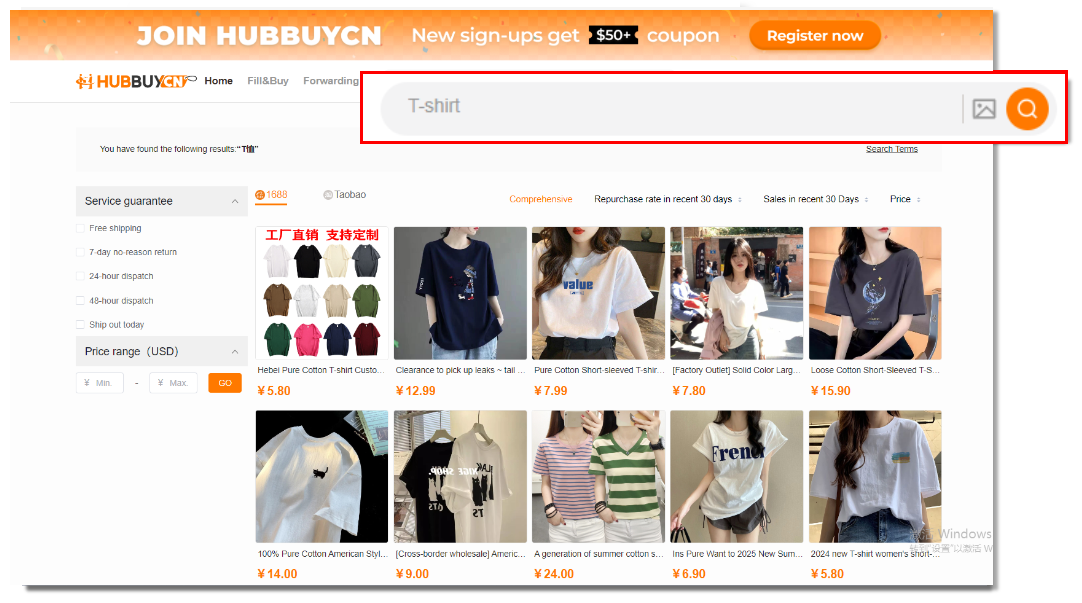
How to use the search box at the top of this guide
The box on the home page is one input and one button. What you type goes straight into a finds catalogue and comes back as product cards, so the useful habit is to type the way a card is written rather than the way a listing is written.
Short English nouns work: cargo pants, varsity jacket, shoulder bag. Model numbers mostly do not, because the people who wrote those cards were describing what the thing looks like, not quoting a seller. If a search comes back thin, drop the adjective before you drop the noun.
The second tool worth knowing is not ours. Once your goods are in the warehouse and you can see a real weight, the official freight calculator is the only thing that turns that weight into a number for the second payment. Until the weight exists, every estimate including ours is arithmetic on a guess.

How to judge a finds spreadsheet before you trust it
A spreadsheet is a product listing site, and listing sites rot. Links die, sellers delist, batches change. Four checks separate a list somebody maintains from a list somebody abandoned.
Does it date anything? Undated pages want you to take their currency on trust. Do the links still open? Pick three at random; two dead out of three means nobody has looked in months. Does it name a maintainer? Not a brand, a person or a desk you can write to. Does it quote prices? A list that prints prices has to update every one of them or start lying, and almost none of them update.
Run the same four checks on this guide. Our changes are dated on the updates page, the editorial address is in the footer of every page, and we quote no item prices anywhere, for exactly the reason above.
